THE INDUCTEES
 13TH CLASS-2026 INDUCTEES
 12TH CLASS-2025 INDUCTEES
11TH CLASS-2024 INDUCTEES
10TH CLASS-2023 INDUCTEES
9TH CLASS-2022 INDUCTEES
8TH CLASS-2020 INDUCTEES
7TH CLASS-2019 INDUCTEES
6TH CLASS-2018 INDUCTEES
5TH CLASS-2017 INDUCTEES
4TH CLASS-2015 INDUCTEES
3RD CLASS-2014 INDUCTEES
2ND CLASS-2013 INDUCTEES
1ST CLASS-2012 INDUCTEES
INDUCTION DINNER INFO
12TH CLASS-2025 INDUCTEES
11TH CLASS-2024 INDUCTEES
10TH CLASS-2023 INDUCTEES
9TH CLASS-2022 INDUCTEES
8TH CLASS-2020 INDUCTEES
7TH CLASS-2019 INDUCTEES
6TH CLASS-2018 INDUCTEES
5TH CLASS-2017 INDUCTEES
4TH CLASS-2015 INDUCTEES
3RD CLASS-2014 INDUCTEES
2ND CLASS-2013 INDUCTEES
1ST CLASS-2012 INDUCTEES
INDUCTION DINNER INFO

ABOUT THE HALL
MISSION STATEMENT
ORDER 'GREEN MOUNTAIN GOLD'
NOMINATION FORM (PDF)
NOMINATION INFO & FAQS
BOARD OF DIRECTORS
SPONSORSHIP OPPORTUNITIES
VSHOF on FACEBOOK
CONTACT US
HOME PAGE

VERMONT SPORTS HALL OF FAME
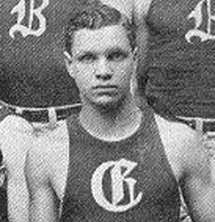
Photo Credit: 1905 BHS Oread Yearbook
Burlington
Multi-Sport Athlete/Coach
Inducted 2026
Historical Inductee
An exceptional athlete at Burlington High and the University of Vermont in the early 1900s, Fenwick Watkins helped break color barriers in sports in the early 1900s. He captained the UVM football team in 1907 and the basketball team in 1908, the first Black sports captain at a non-historical Black college or university. He later would become a collegiate head coach in football, basketball and baseball at schools in North Dakota and Minnesota. He is the 2026 Vermont Sports Hall of Fame Historical Inductee.
Watkins, who grew up on Elmwood Avenue in Burlington, was a three-sport star in football, basketball and baseball at Burlington High graduating in 1905. He was the BHS basketball captain as a senior, a star on the gridiron in football and was one of his team's top hitters in the spring. A teammate in all three sports was Ray Collins, one of the inaugural inductees into the Vermont Sports Hall of Fame.
After a short stint at Phillips Exeter Academy, he came back to attend UVM, also playing football, basketball and baseball. He joined Collins on the UVM basketball team and on its baseball team. The two from BHS were joined on the Vermont diamond by Larry Gardner of Enosburg Falls, another inaugural VSHOF inductee.
Watkins would make history becoming the captain of the UVM football team in the fall of 1907 and then the basketball team in 1907-08. That season the UVM ‘cagers’ went 7-4, the program’s first winning season after 'basket ball', as it was called then, was established at the school in 1900.
Watkins was a starting back in his four years of football, helping the team to 6-4-1 mark in 1905 and a 5-4 record the next year. One of his highlights as a frosh was a 85-yard touchdown run in a 16-0 win at Norwich on November 15, 1905 that clinched a winning season. That fall was the first football season for UVM at historic Centennial Field and the next spring, he played in the first baseball game at the ballpark that is still in use.
He also played on the UVM diamond with Collins, and another VSHOF inductee Larry Gardner, who had a lengthy Major League career. Watkins was a key member and the first baseman of the 1908 and 1909 UVM baseball teams that were recognized as one of the best in the region. Vermont was 15-9 in 1908 and was recognized as the New England champions.
After graduating from UVM in 1909, he moved to Fargo, North Dakota, where he became the first Black to be a college coach in the state. He coached baseball and football, as an assistant and as a head coach, for about a decade at Fargo College, a small school that would close due to financial reasons in 1920. His Fargo College teams would post wins over much bigger schools in the area including the University of North Dakota.
In the fall of 1921 he joined the athletic department at North Dakota Agricultural College in Fargo, which is now North Dakota State University. Watkins was hired to be an assistant athletic director and assistant coach in football and basketball, and its baseball coach. It was noteworthy that he became the first black NDSU head coach in 1922, leading the baseball team to a 4-4 record against collegiate teams.
The next fall, Watkins moved across the Red River to Concordia College in Moorhead, Minnesota where in four seasons from 1922 to 1925 he was both the head football coach and the school’s first head basketball coach. The Concordia athletics historical archives stated “Watkins is known for boosting Concordia athletics and for recognizing the importance of scholarship and teamwork to athletic excellence. A biographical description in the 1926 Scout yearbook states, “His [Watkins’] ability to develop material, whip rookies into shape, and instill fight into his teams has been a subject of much favorable comment.”
He also was the football coach for one season at Moorhead High before retiring from coaching in 1926. He had a career in real estate in Fargo until his death in 1943.
Sources: 1909 UVM Ariel; 1905, 1906, 1907 UVM Cynic; www.HCSConline.org, Clay County Histories (Markus Krueger); Dakota Datebook Archive, 5-29-22 (Dr. Steve Hoffbeck);


© Copyright Vermont Sports Hall of Fame. All rights reserved.